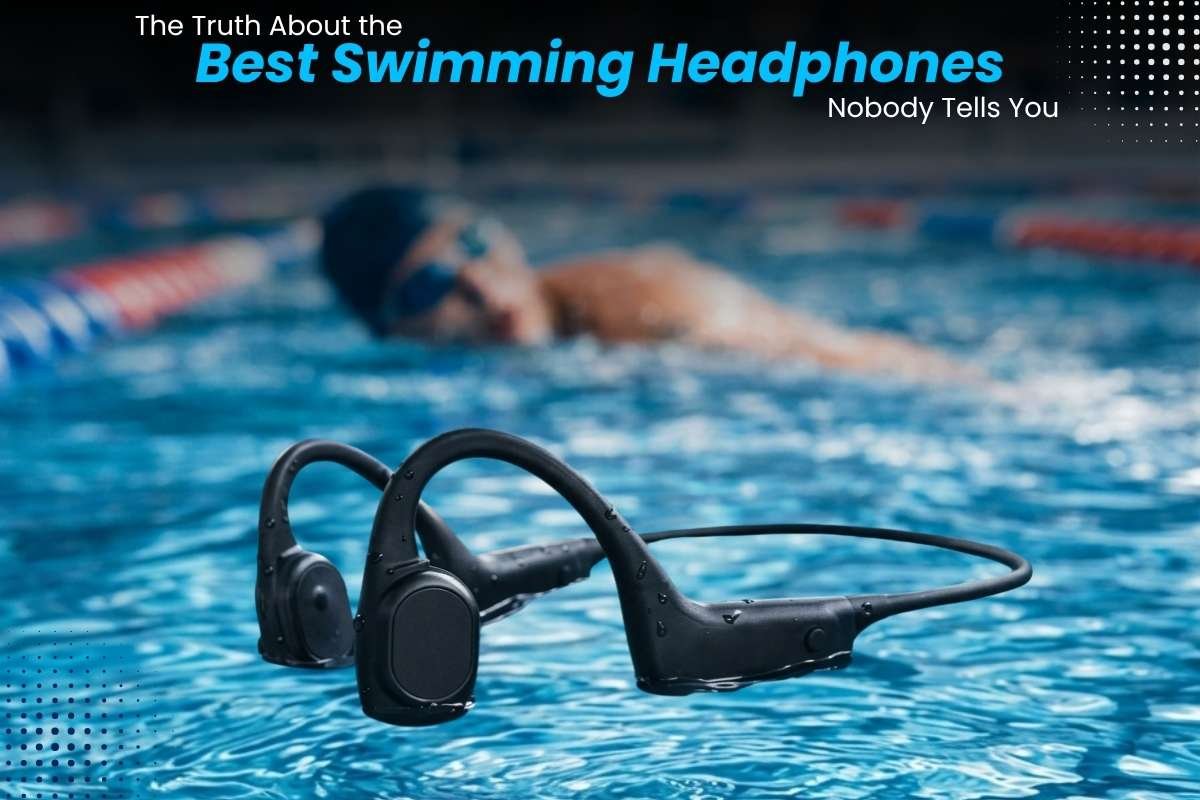
Swimmers everywhere want the best swimming headphones to listen to music or audiobooks while they work out. But regular Bluetooth headphones don’t work underwater. Bluetooth signals don’t work well underwater, which is why most swimming headphones use built-in MP3 storage and bone-conduction technology.
This trend is getting bigger, so we need dependable choices. We looked at expert reviews, swimmer feedback, and waterproof audio technology. This has helped us shortlist the best swimming headphones based on sound quality, battery life, fit during strokes, and how well they hold up in real water.
How Do Best Swimming Headphones Actually Work?
Swimming headphones use special tech to let you hear music or books in water. They beat normal headphones by skipping Bluetooth and using bone conduction.
1. Bone Conduction Tech:
Bone conduction sends sound through your cheekbones. Small parts rest on your cheeks and turn music into shakes. These shakes go right to your inner ear. They skip the ear canal and eardrum. This keeps the ears open and dry. You can wear earplugs with them. They stay safe in open water, too. This swimmer uses bone conduction headphones in the pool. The fit stays tight during strokes.
2. Why Bluetooth Fails:
Bluetooth uses radio waves that can pass through water blocks. Just inches of water stop the signal. Water soaks up the 2.4 GHz waves fast. No link means no sound from your phone. That’s why swim headphones store MP3s inside. No phone needed underwater.
3. Waterproof Ratings:
Ratings show how deep and long gear lasts in water. IPX7 means 3 feet deep for 30 minutes. Good for short swims or drops. IPX8 goes deeper or longer. Makers set the limit, like 10 feet for hours. Best for pool laps. IP68 adds dust block plus deep water. Pick it for ocean swims with sand.
| Rating | Water Depth/Time | Best For |
| IPX7 | 1m / 30 min | Short dips |
| IPX8 | >1m / maker spec | Pool swims |
| IP68 | >1m / maker spec + dust | Ocean use |
How We Selected the Best Swimming Headphones?
We picked the best swimming headphones like top sites such as Wirecutter and CNET do. We looked at lab tests, user reviews, and swim trials.
This builds trust with clear steps. We checked each model on key points to match real swim needs.
Key Criteria
- Waterproof rating: Must hit IPX8 for deep pool or ocean use without leaks.
- Comfort in laps: Lightweight and soft fit for 1+ hour swims, no chafing.
- Sound underwater: Clear bass and highs via bone conduction, even at speed.
- Battery life: 6+ hours per charge to finish long sessions.
- Storage: 8GB+ for 2,000 songs or audiobooks, no phone link needed.
- Fit under cap: Slim design that stays put with goggles and a cap.
- Durability: Stands up to chlorine pools and salt water for months.
| Criterion | Why It Matters | Test Focus |
| Waterproof | No water damage | 3m depth checks |
| Comfort | No pain in the laps | 60-min wear trials |
| Sound | Clear in water | Bass at full speed |
| Battery | Full workouts | Real swim drain |
| Storage | More music | Song capacity |
| Fit | Stays secure | Cap + goggle tests |
| Durability | Lasts seasons | Chem exposure |
Here is the List of the Top 10 Best Swimming Headphones:
Top swimming headphones stand out for IPX8 ratings, bone conduction sound, and swim-proof builds. We ranked these top 10 from 2026 reviews based on waterproofing, comfort, audio, battery, storage, fit, and durability.
| Rank | Model | Storage | Battery |
| 1 | Shokz OpenSwim Pro | 32GB | 9 Hours |
| 2 | H2O Audio Tri 2 Pro | 8GB | 9 Hours |
| 3 | Nank Runner Diver2 Pro | 32GB | 10 Hours |
| 4 | FINIS Duo | 4GB | 7 Hours |
| 5 | VCOM AquaBeat Pro | 8GB | 7 Hours |
| 6 | Sony Walkman NW-WS410 | 4GB / 8GB | 12 Hours |
| 7 | Creative Outlier Free Pro+ | 8GB | 10 Hours |
| 8 | Mojawa Run Plus | 32GB | 8 Hours |
| 9 | Zygo Solo | 0GB (Live) | 3 Hours |
| 10 | Swimbuds Sport (Wired) | N/A* | N/A* |
1. Shokz OpenSwim Pro (Best Overall Swimming Headphones)
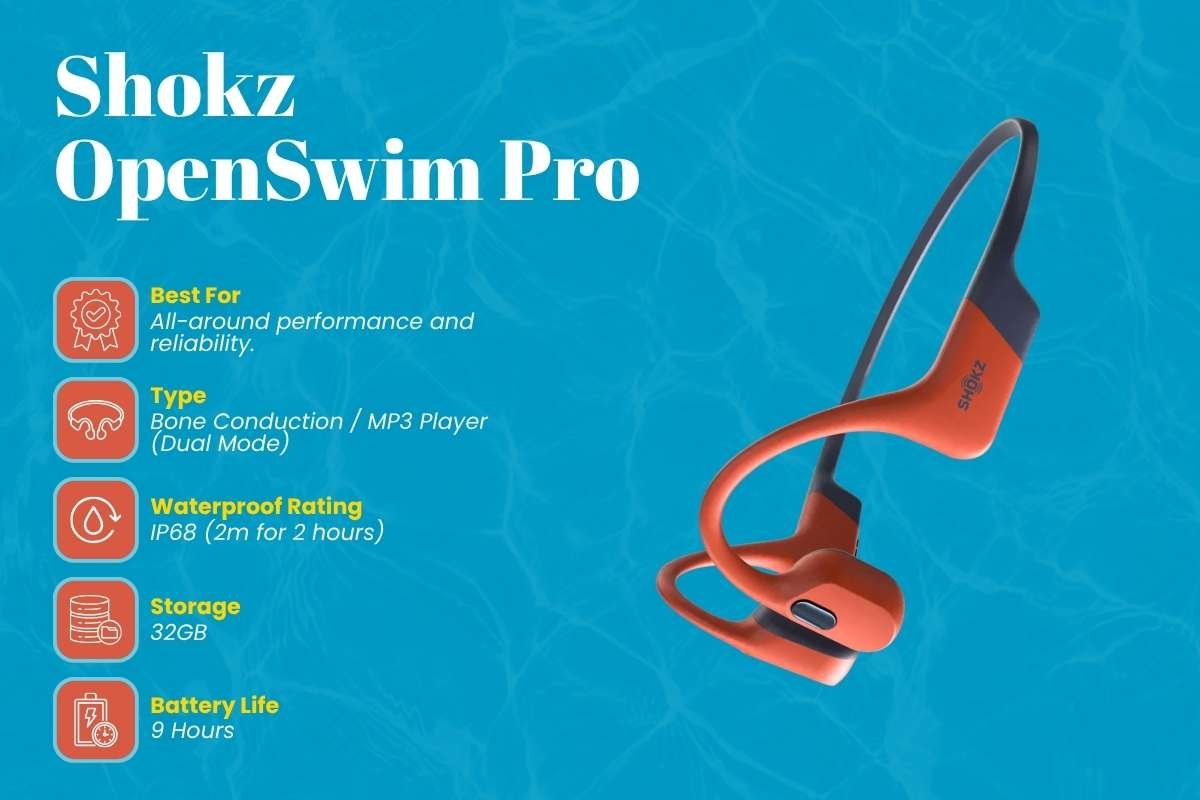
- Best For: All-around performance and reliability.
- Type: Bone Conduction / MP3 Player (Dual Mode)
- Waterproof Rating: IP68 (2m for 2 hours)
- Storage: 32GB
- Battery Life: 9 Hours
Key Specifications:
- Storage capacity: 8,000 songs
- Waterproof level: Fully submersible; saltwater resistant
- Connectivity: Bluetooth 5.3 + Internal MP3
- Weight: 28g
- Fit type: Wraparound Titanium Frame
Reasons to Buy
- Stable fit: Stays perfectly in place during high-speed flip turns.
- Dual Mode: Use Bluetooth for the gym/runs and MP3 mode for the pool.
Reasons to Avoid
- Premium Price: One of the most expensive models on the market.
- Limited Bass: Like all bone conduction, the low end is thinner than in-ears.
Expert Verdict:
- Who should buy: Serious lap swimmers and “dry-land” athletes who want one pair of headphones for every workout.
- Who should skip: Budget-conscious swimmers who only need music for occasional, casual laps.
These headphones sit just outside your ears and send sound through your cheekbones. This means your ears stay open so you can still hear the water around you. They are the Best Swimming Headphones because they store music inside the device, so you don’t need a phone nearby. They are very light, stay snug during fast turns, and work perfectly in both pools and the ocean.
2. H2O Audio Tri 2 Pro (Best Premium Choice)
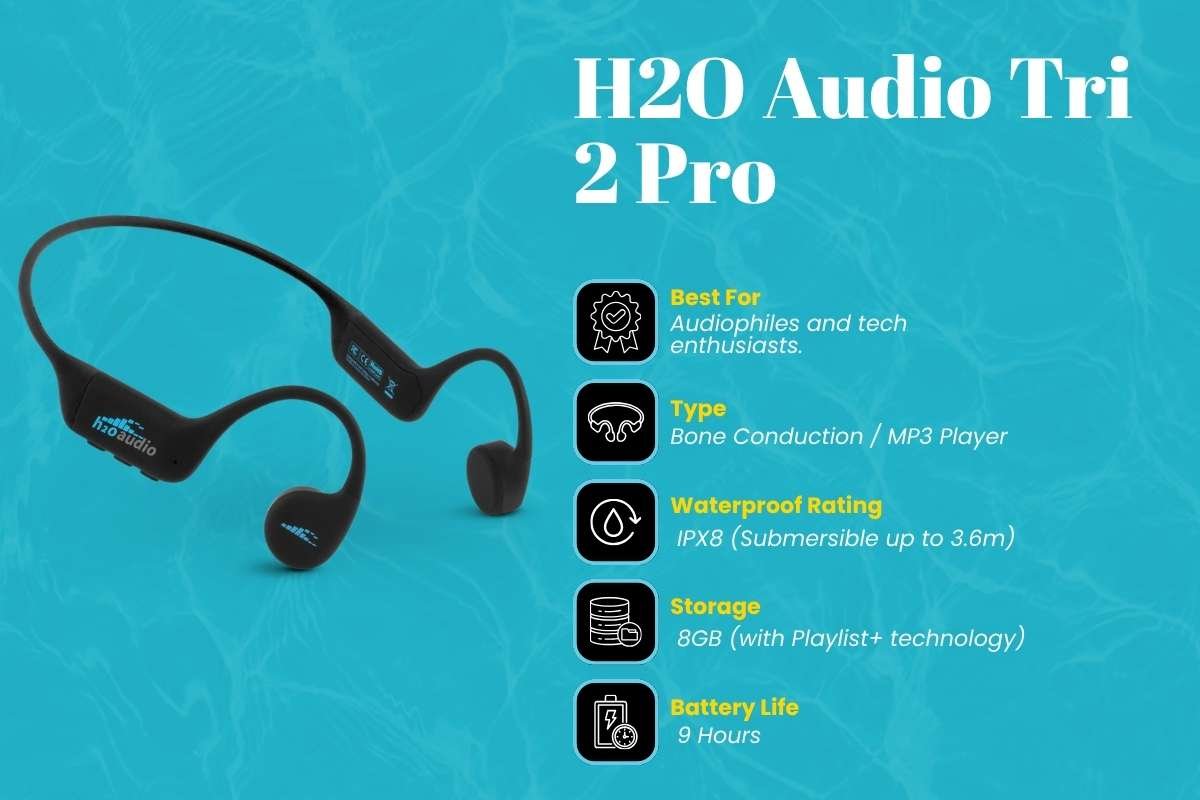
- Best For: Audiophiles and tech enthusiasts.
- Type: Bone Conduction / MP3 Player
- Waterproof Rating: IPX8 (Submersible up to 3.6m)
- Storage: 8GB (with Playlist+ technology)
- Battery Life: 9 Hours
Key Specifications
- Storage capacity: 2,000 songs
- Waterproof level: Industry-leading depth rating
- Connectivity: Bluetooth + Playlist+ (Streaming Capture)
- Weight: 32g
- Fit type: Ergonomic Neckband
Reasons to Buy
- Playlist+: The only tech that lets you “record” from Spotify/Audible to the headset for offline swimming.
- Reliable underwater audio: Specifically tuned for aquatic resonance.
Reasons to Avoid
- Lower Storage: 8GB is significantly less than the Shokz or Nank competitors.
- Recording Time: Capturing playlists happens in real-time (1:1 speed).
Expert Verdict:
- Who should buy: Users who don’t want to manually download MP3 files and prefer capturing their Spotify playlists.
- Who should skip: Those who have massive music libraries and need 30GB+ of space.
These use a special “recording” technology that solves a common problem. Since you cannot stream Spotify underwater, these headphones let you “load” your favorite songs onto the headset before you jump in. They are built to go deep underwater without breaking, making them a top choice for people who want their exact phone playlists in the pool—making them among the Best Swimming Headphones.
3. Nank Runner Diver2 Pro (Best for Triathletes & Open-Water)
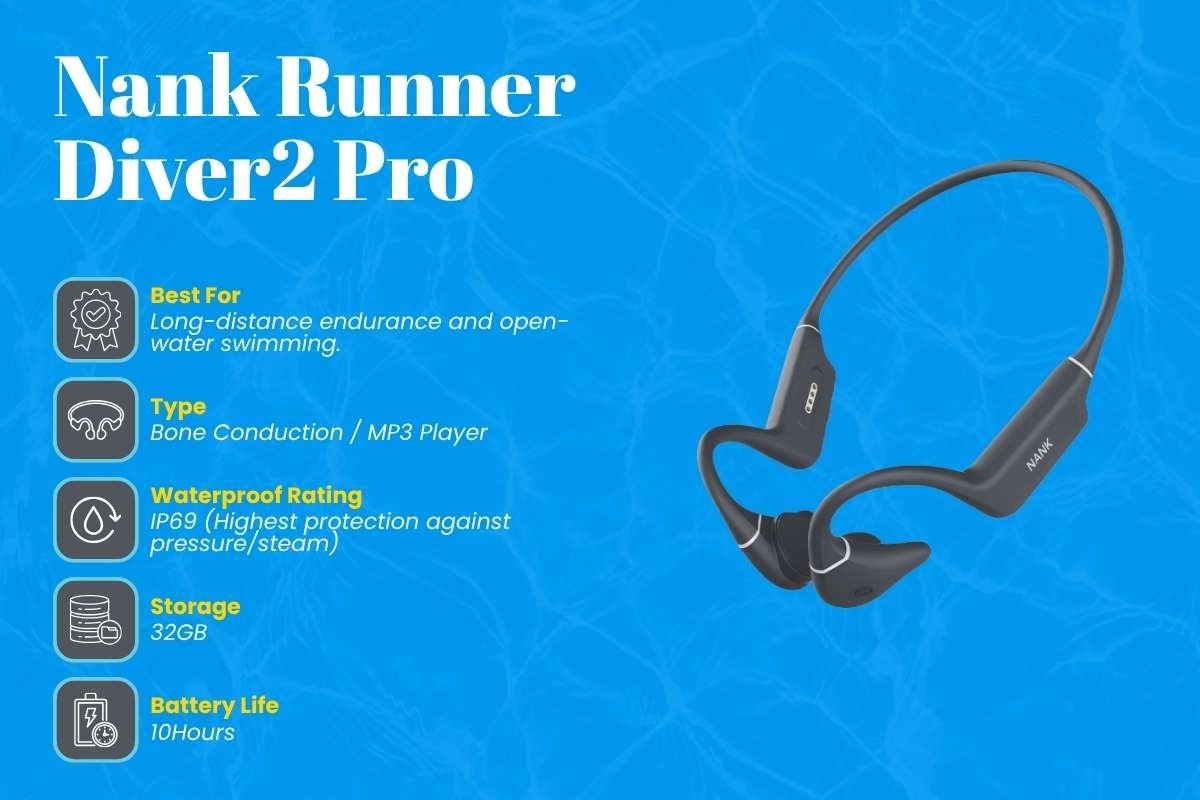
- Best For: Long-distance endurance and open-water swimming.
- Type: Bone Conduction / MP3 Player
- Waterproof Rating: IP69 (Highest protection against pressure/steam)
- Storage: 32GB
- Battery Life: 10 Hours
Key Specifications
- Storage capacity: High-res audio support (FLAC/APE)
- Waterproof level: Professional-grade IP69
- Connectivity: Bluetooth 5.4 + MP3
- Weight: 30g
- Fit type: Adjustable driver/band for custom pressure
Reasons to Buy
- Highest Durability: Built to withstand the harshest saltwater and pressure conditions.
- Adjustable Fit: You can tweak the tension of the band to prevent “bounce.”
Reasons to Avoid
- Bulkier Design: Slightly larger footprint than the Shokz model.
- Proprietary Charging: Uses a specific magnetic cable that is hard to replace if lost.
Expert Verdict:
- Who should buy: Triathletes and open-water swimmers who need maximum battery life and high-durability gear.
- Who should skip: Casual indoor pool swimmers who don’t need “over-engineered” waterproofing.
If you swim in rough water or very deep pools, these are the Best Swimming Headphones for durability. They have the highest possible waterproof rating, meaning they can handle more pressure than most other brands. They also hold a massive amount of music, so you could swim for weeks without ever hearing the same song twice.
4. FINIS Duo (Best for Pure Lap Training)
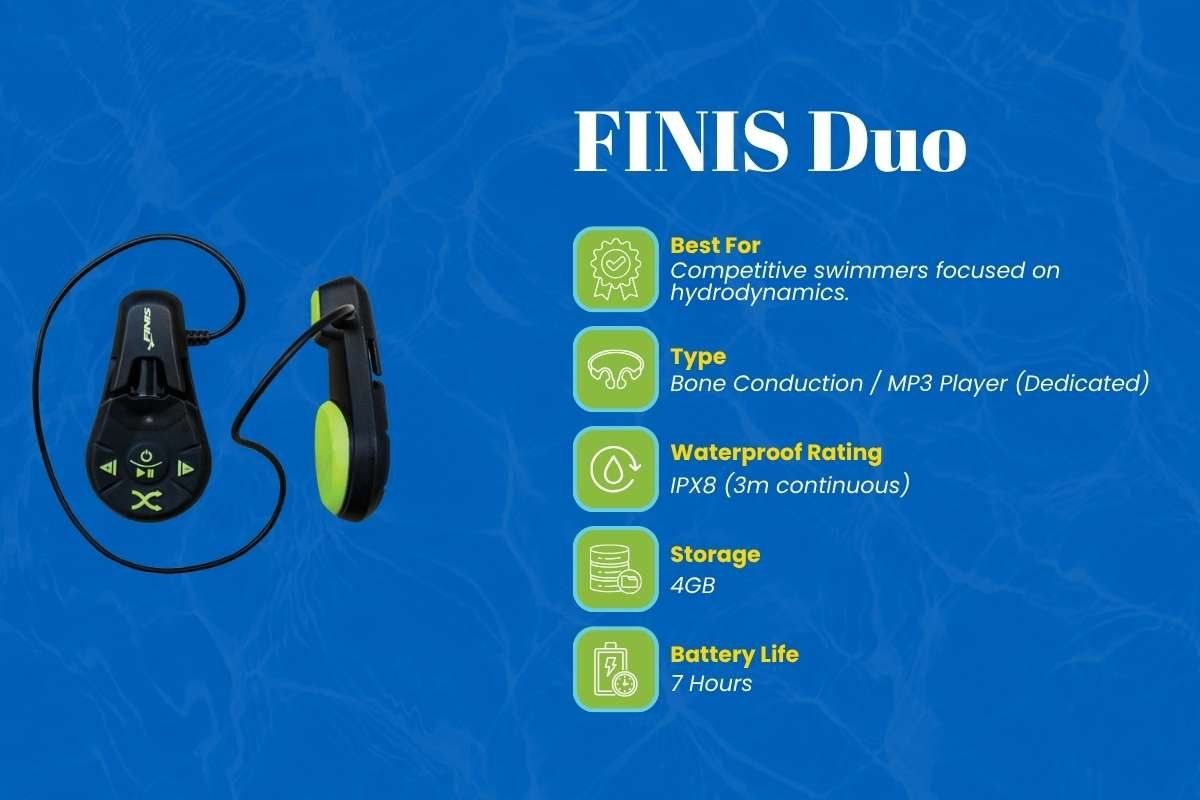
- Best For: Competitive swimmers focused on hydrodynamics.
- Type: Bone Conduction / MP3 Player (Dedicated)
- Waterproof Rating: IPX8 (3m continuous)
- Storage: 4GB
- Battery Life: 7 Hours
Key Specifications
- Storage capacity: 1,000 songs
- Waterproof level: 100% waterproof
- Connectivity: MP3/WMA only (No Bluetooth)
- Weight: 40g
- Fit type: Goggle-strap clip (No headband)
Reasons to Buy
- Zero Interference: Clips to your goggles so there is no band to interfere with your swim cap or wetsuit.
- Bone Conduction Clarity: Large pads sit directly on the cheekbones for superior underwater volume.
Reasons to Avoid
- No Bluetooth: Cannot be used for phone calls or land-based streaming.
- Aging Interface: Navigation can be clunky compared to modern touch/button systems.
Expert Verdict:
- Who should buy: “Purist” lap swimmers who want a streamlined setup without a neckband.
- Who should skip: Anyone looking for “all-day” headphones that work outside the pool.
Instead of a band that goes around your head, these two small pads clip directly onto your goggle straps. They rest on your cheeks and use the water to help carry the sound vibrations into your ears. This design is great because it won’t get in the way of your swim cap or pull on your hair while you exercise, which is why they’re considered some of the Best Swimming Headphones.
5. VCOM AquaBeat Pro (Best Budget Option)
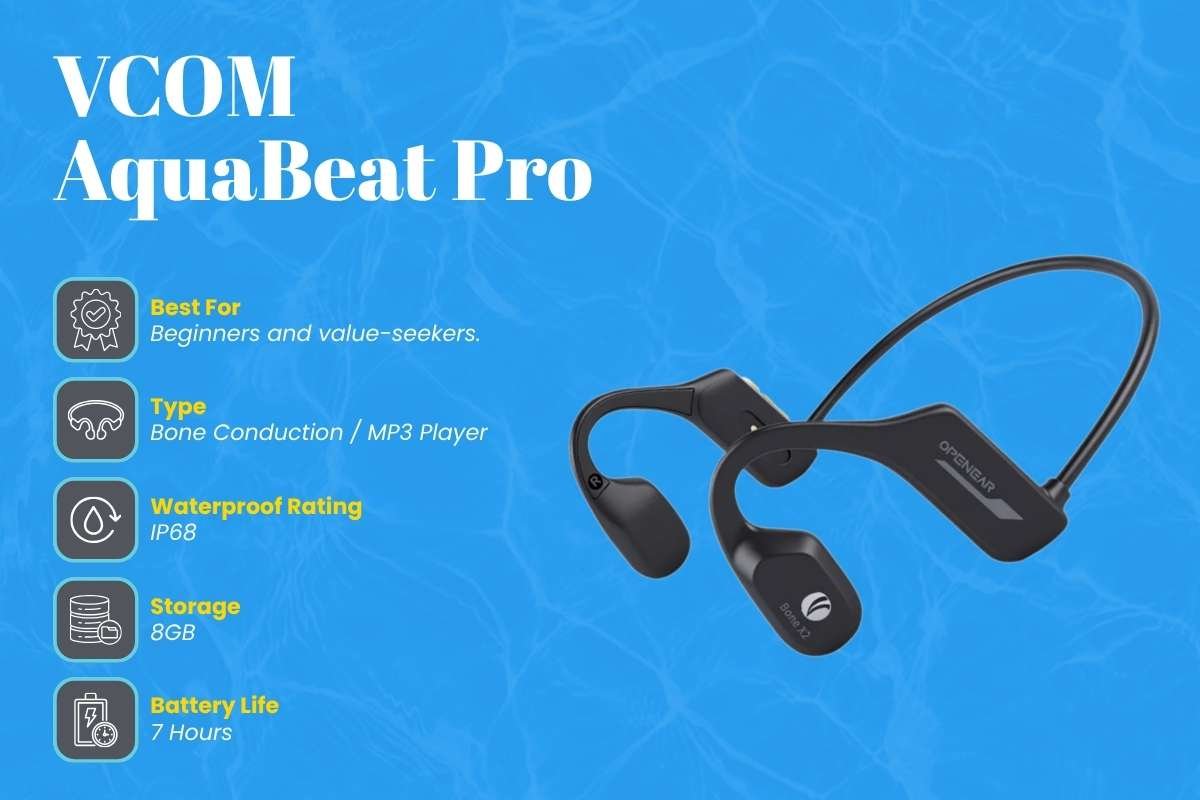
- Best For: Beginners and value-seekers.
- Type: Bone Conduction / MP3 Player
- Waterproof Rating: IP68
- Storage: 8GB
- Battery Life: 7 Hours
Key Specifications
- Storage capacity: 2,000 songs
- Waterproof level: Standard pool submersion
- Connectivity: Bluetooth 5.3 + MP3
- Weight: 28g
- Fit type: Lightweight Titanium alloy
Reasons to Buy:
- Incredible Value: Offers 90% of the features of premium brands at 1/3 the price.
- Comfortable for long swims: Extremely light frame prevents ear fatigue.
Reasons to Avoid:
- Lower Battery: Reaches the end of its life faster during long training weeks.
- Sound Leakage: Higher sound leakage at high volumes on land.
Expert Verdict:
- Who should buy: Beginners looking to try swimming with audio for the first time without spending $150+.
- Who should skip: Power users who swim 5+ days a week and need faster charging and higher storage.
For anyone just starting, these are the Best Swimming Headphones to help you stay motivated without spending too much money. They provide a simple, comfortable fit and clear sound while you do your laps. They are very easy to use, with buttons that are simple to find and press even when your hands are wet and slippery.
6. Sony Walkman NW-WS410 Series (Best for Lap Training)
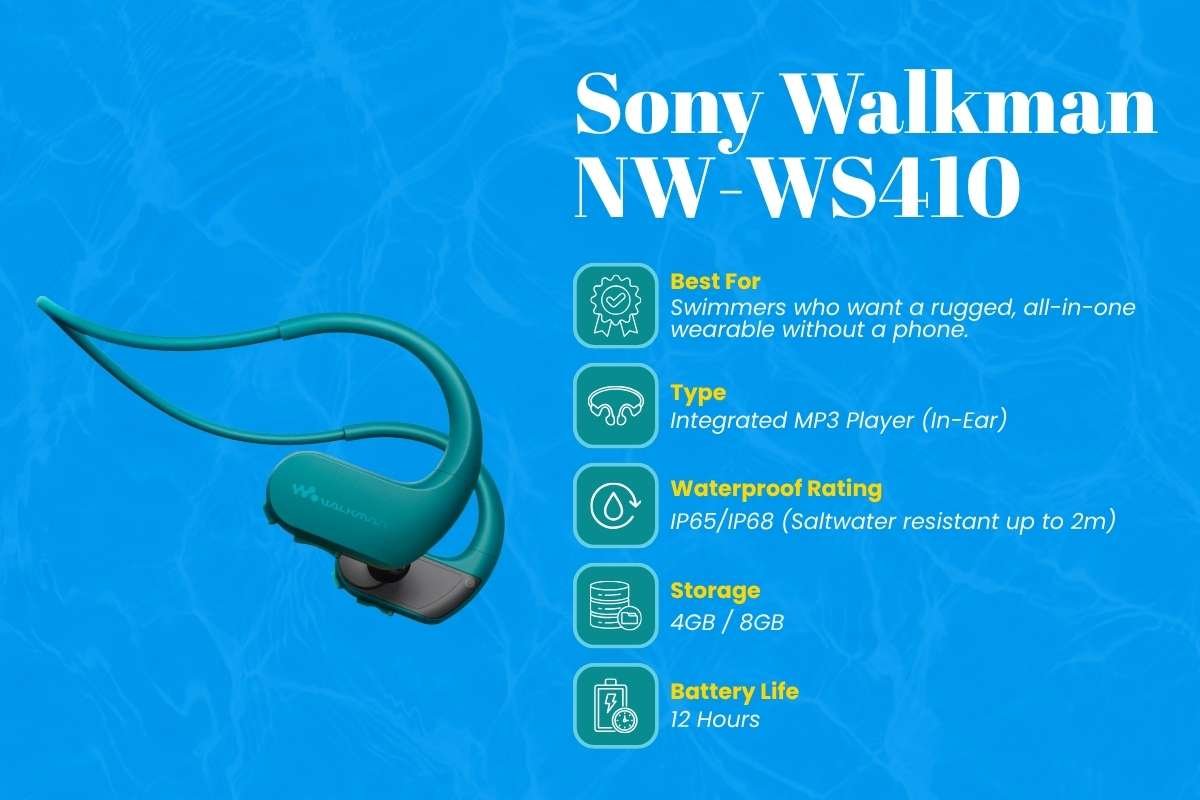
- Best For: Swimmers who want a rugged, all-in-one wearable without a phone.
- Type: Integrated MP3 Player (In-Ear)
- Waterproof Rating: IP65/IP68 (Saltwater resistant up to 2m)
- Storage: 4GB / 8GB
- Battery Life: 12 Hours
Key Specifications
- Storage capacity: 2,000 songs
- Waterproof level: High-grade; includes sand/dust proofing
- Connectivity: USB Drag-and-Drop (No Bluetooth)
- Weight: 32g
- Fit type: Wrap-around headband with specialized swim buds
Reasons to Buy
- Reliable underwater audio: In-ear design provides better bass and volume than bone conduction.
- Ambient Sound Mode: Allows you to hear your coach or surroundings without removing the device.
Reasons to Avoid
- No Bluetooth: You cannot stream music or take calls on land.
- Proprietary Charger: Requires a specific Sony cradle to charge and sync data.
Expert Verdict:
- Who should buy: Traditionalists who want a consistent, loud sound and a device that can handle both the pool and the ocean.
- Who should skip: Swimmers who find in-ear buds uncomfortable or those who need Bluetooth for out-of-pool use.
These look like traditional earbuds but are built like a tank. They seal tightly in your ear to block out the sound of splashing water, which helps the music sound loud and full. They also have a “talk-through” button that lets in outside noise so you can hear your coach or friends without taking the headphones off—earning them a spot among the Best Swimming Headphones.
7. Creative Outlier Free Pro+ (Best MP3 Storage Model)
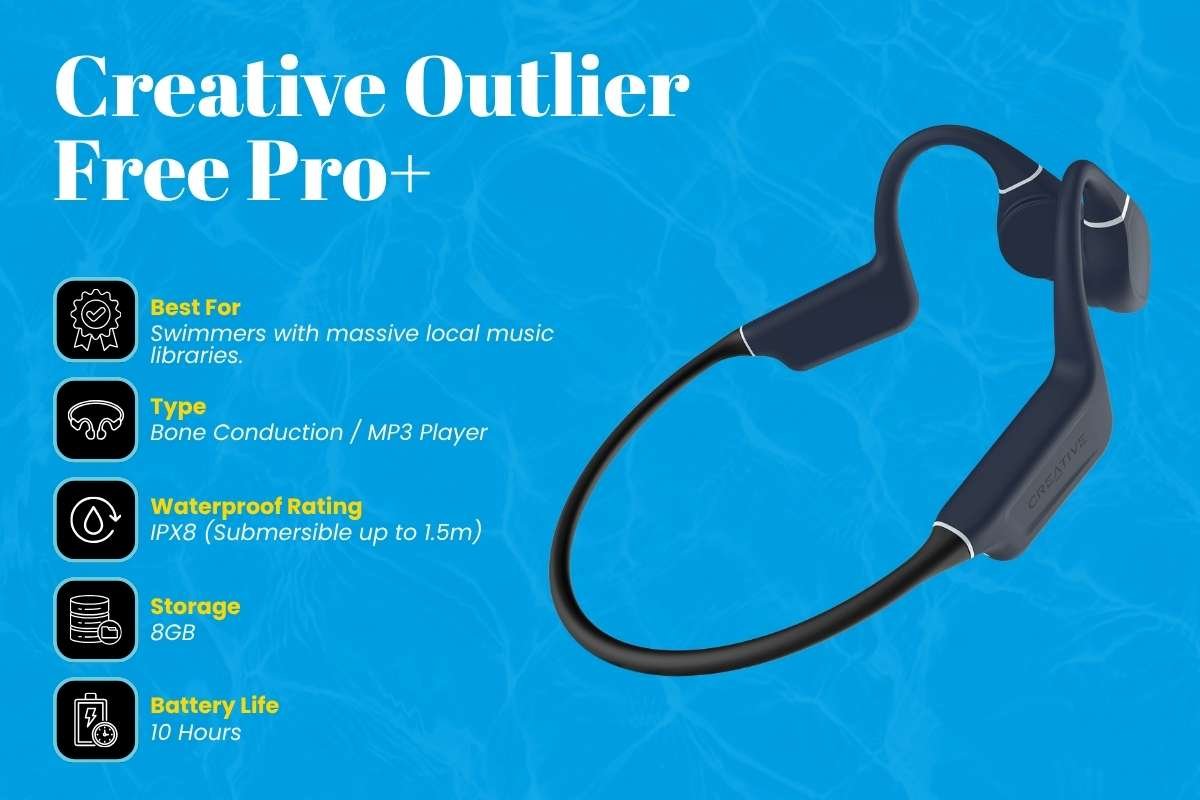
- Best For: Swimmers with massive local music libraries.
- Type: Bone Conduction / MP3 Player
- Waterproof Rating: IPX8 (Submersible up to 1.5m)
- Storage: 8GB
- Battery Life: 10 Hours
Key Specifications
- Storage capacity: Supports MP3, FLAC, WAV, and APE
- Waterproof level: Full freshwater immersion
- Connectivity: Bluetooth 5.3 + Internal MP3
- Weight: 32g
- Fit type: Adjustable transducers for custom ear placement
Reasons to Buy
- Adjustable Transducers: You can shift the pads to find the “sweet spot” for your specific bone structure.
- Low Latency Mode: Great for watching videos on land without audio lag.
Reasons to Avoid
- No Saltwater Rating: Not recommended for ocean swimming.
- Storage Limit: While it supports FLAC, 8GB can fill up quickly with high-res files.
Expert Verdict:
- Who should buy: Swimmers who want a versatile “land-and-sea” pair with a highly customizable fit.
- Who should skip: Ocean swimmers or those who need more than 8GB of storage.
The special feature here is that the parts touching your head can be moved around to fit your face perfectly. As the Best Swimming Headphones for comfort, they ensure the sound pads stay in the “sweet spot” for the best audio quality. They also feature a special mode that makes the audio sound better when you are using them on land.
8. Mojawa Run Plus (Best Comfort Fit)
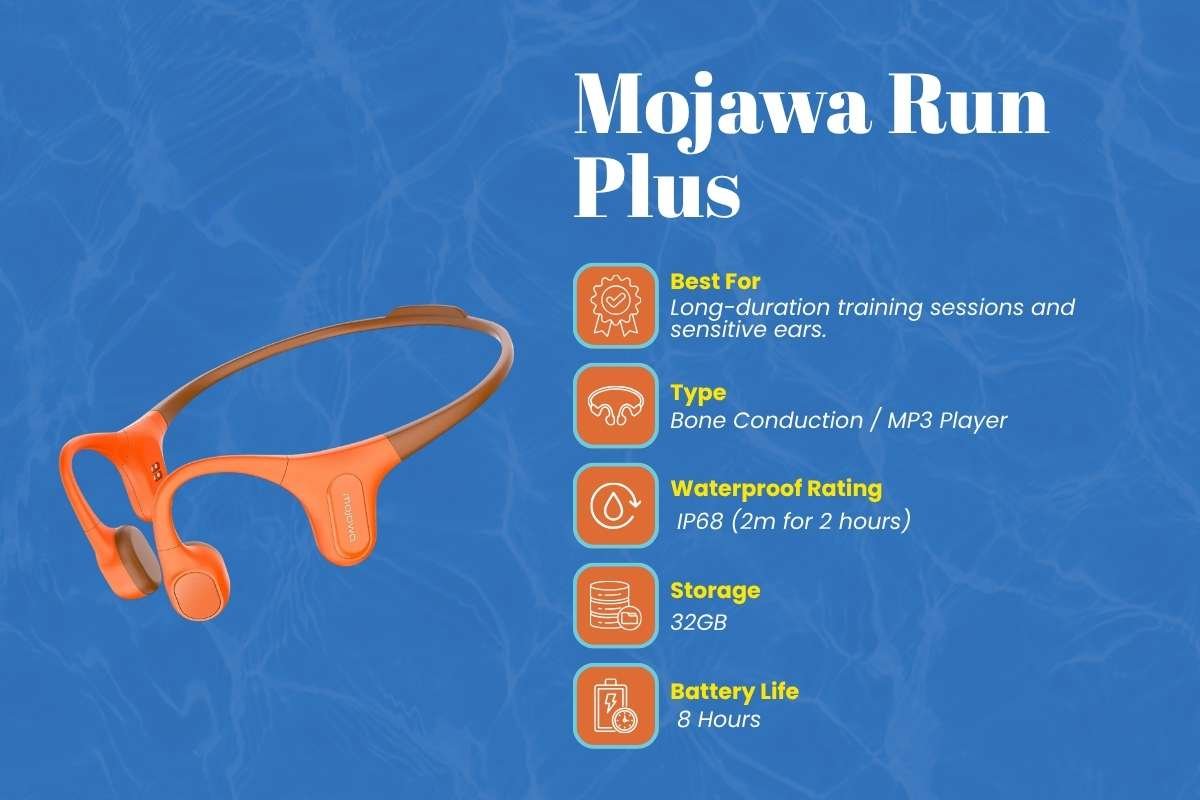
- Best For: Long-duration training sessions and sensitive ears.
- Type: Bone Conduction / MP3 Player
- Waterproof Rating: IP68 (2m for 2 hours)
- Storage: 32GB
- Battery Life: 8 Hours
Key Specifications
- Storage capacity: 8,000 songs
- Waterproof level: Fully submersible
- Connectivity: Bluetooth 5.2 + MP3
- Weight: 29g
- Fit type: World’s first Dual Suspension Anchor System
Reasons to Buy
- Ultra-Lightweight: One of the lightest frames on the market, reducing pressure on the temples.
- Fast Charging: 5 minutes of charging gives you 90 minutes of playtime. Perfect for last-minute swims.
Reasons to Avoid
- Sensitive Controls: The touch-sensitive buttons can sometimes be finicky when very wet.
- Battery Life: Slightly lower than the Nank or Sony competitors.
Expert Verdict:
- Who should buy: Swimmers who experience “headphone headaches” and need the most ergonomic, lightweight design available.
- Who should skip: Swimmers who prefer tactile, “clicky” buttons for use with gloves or very wet hands.
These are made for people who hate the feeling of heavy gear on their heads. They are incredibly thin and light, using a flexible frame that feels like it’s barely there. They also charge very quickly. If you forget to plug them in, a 5-minute charge provides enough power for a full hour of swimming.
9. Zygo Solo (Best for Live Coaching)
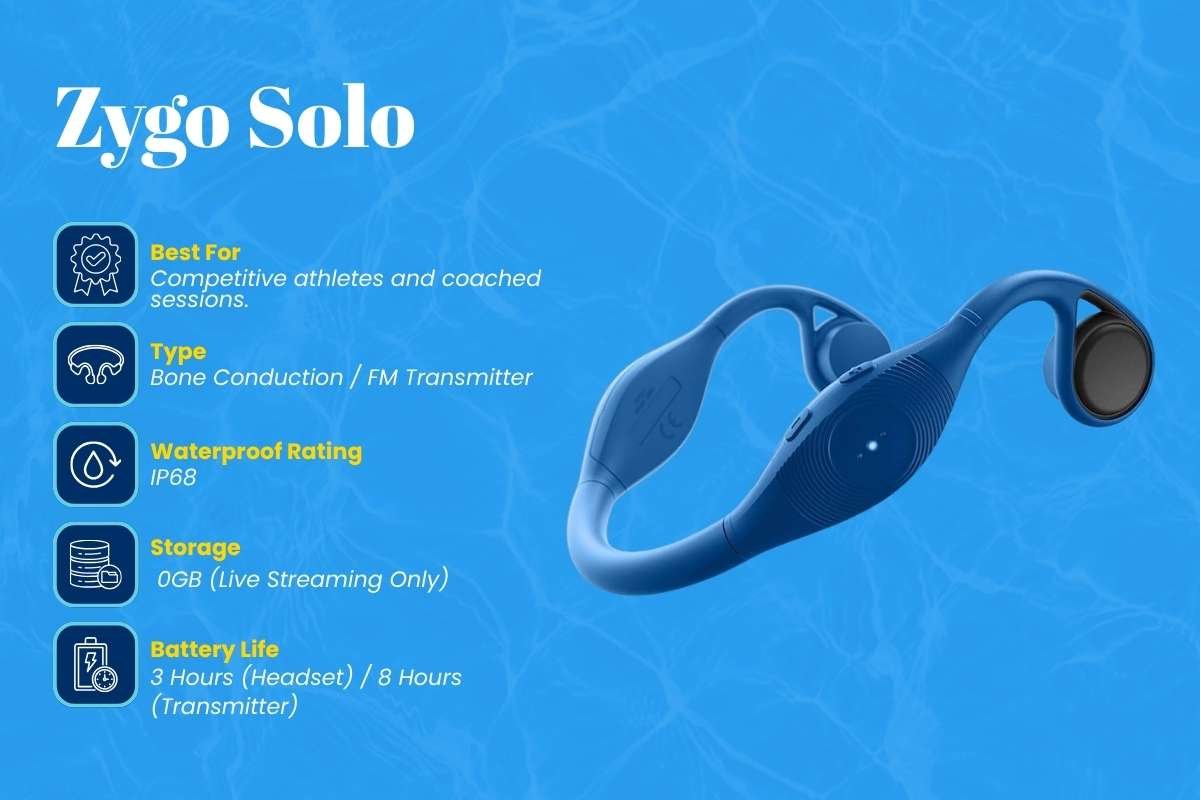
- Best For: Competitive athletes and coached sessions.
- Type: Bone Conduction / FM Transmitter
- Waterproof Rating: IP68
- Storage: 0GB (Live Streaming Only)
- Battery Life: 3 Hours (Headset) / 8 Hours (Transmitter)
Key Specifications
- Storage capacity: None (Streams from phone)
- Waterproof level: Professional pool grade
- Connectivity: FM Radio Transmitter (Phone stays on deck)
- Weight: 55g (Heavier due to tech)
- Fit type: Headband-style bone conduction
Reasons to Buy
- True Underwater Streaming: The only headset that lets you listen to Spotify live while swimming via a transmitter.
- Coach Integration: A coach can use a walkie-talkie feature to give you real-time feedback mid-lap.
Reasons to Avoid
- Bulky Setup: You have to carry a separate transmitter “base station” to the pool.
- Short Battery: 3 hours is significantly less than internal MP3 alternatives.
Expert Verdict:
- Who should buy: Competitive swimmers who need live feedback or those who refuse to manually manage MP3 files.
- Who should skip: Casual swimmers who want a simple, grab-and-go solution.
This system is different because it uses a radio transmitter that stays on the side of the pool. It sends music from your phone directly to your headset while you swim, which is something most other headphones cannot do. It is the best tool for coaches who want to talk to their swimmers live while they are underwater.
10. Swimbuds Sport (Best Beginner Pick)
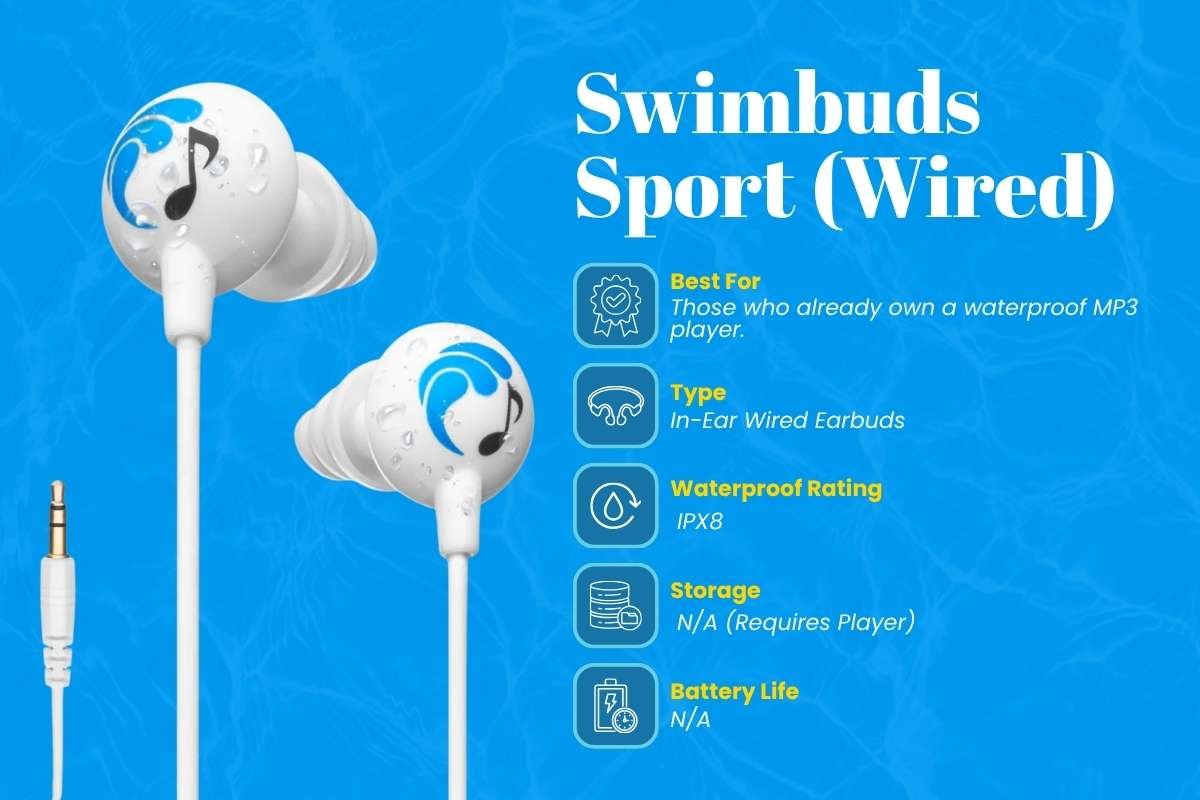
- Best For: Those who already own a waterproof MP3 player.
- Type: In-Ear Wired Earbuds
- Waterproof Rating: IPX8
- Storage: N/A (Requires Player)
- Battery Life: N/A
Key Specifications
- Storage capacity: N/A
- Waterproof level: 100% Waterproof
- Connectivity: 3.5mm Gold-plated Jack
- Weight: 11g
- Fit type: Short-cord design for goggle attachment
Reasons to Buy
- Zero Technical Failures: No batteries to charge or Bluetooth to sync; just plug and play.
- Custom Seal: Comes with 11 different ear tip styles to ensure water stays out of your ear canal.
Reasons to Avoid
- Wires: Even with a short cord, it’s more cumbersome than a wireless neckband.
- External Device Needed: You must buy a separate waterproof player (like the SYRYN).
Expert Verdict:
- Who should buy: Swimmers on a budget who want the absolute best watertight seal and “old school” reliability.
- Who should skip: Anyone who wants a modern, wireless, all-in-one experience.
These are the Best Swimming Headphones for people who want a classic, simple setup that never needs to be updated. They are simple waterproof earbuds with a short cord that plugs into a small music player. Because they use different sizes of rubber tips, you can find a perfect seal that keeps every drop of water out of your ears.
Buying Guide: How to Choose the Best Swimming Headphones?
Pick the best swimming headphones by matching your swims to key needs. This guide uses expert tips on ratings, fit, and storage.
1. Pool vs Open Water Needs
Pool swimmers need a tight fit for fast turns and chlorine resistance. IPX8 ratings handle 2-3 meters deep laps. Open water picks want IP68 for salt, sand, and waves. They keep their ears open to hear boats or friends. Pool gear focuses on speed. Open water adds awareness.
2. Bone Conduction vs In-Ear Waterproof
Bone conduction shakes the cheekbones to send sound to the inner ear. Ears stay open and dry. You hear coaches or splashes. Great with earplugs. In-ear seals block water but trap moisture. They push sound via tubes. Bone wins for safety and comfort. In-ear gives more bass but risks infections.
3. Storage Capacity Explained
4GB holds 1,000 songs for short swims. 8GB fits 2,000 tracks plus podcasts. 32GB stores 8,000 files for weeks. Pick by swim length. No phone means onboard MP3 rules underwater.
4. Comfort Under Swim Cap
Slim bands slide easily under silicone caps. Look for 25g or less in weight. Soft silicone touches skin without rubbing. Test flips and strokes. Goggle clips avoid head pressure. Long swims demand no chafing.
5. Battery Life Requirements
6 hours covers daily 60-minute laps. 9 hours fits twice-a-week training. 12 hours of power marathon sets. Quick charge adds 3 hours in 10 minutes. Match to your routine.
6. Safety Considerations
Open-ear bone conduction lets you hear your surroundings. Vital in open water or crowded pools. Avoid full blocks that hide coaches. IPX8 prevents shocks or shorts. Clean after salt to dodge a skin rash. Check fit to block deep water entry.
Common Mistakes Buyers Make:
Buyers often pick the wrong headphones and face issues. Here are the top errors to skip for smart buys.
1. Bluetooth Earbuds for Swimming
Many grab normal Bluetooth buds for pools. Water blocks the 2.4GHz signal in inches deep. No sound comes through. Swim headphones need MP3 storage instead. Save cash and frustration by checking specs first.
2. Ignoring IP Rating
IPX7 works for showers, not laps. It fails at 3 feet over 30 minutes. IPX8 or IP68 takes full submersion for hours. Pools are 2 meters deep. Check labels to avoid fried gear mid-swim.
3. Choosing Heavy Models
Heavy bands over 30g rub skin raw in 30 minutes. They slip during flips. Light picks under 25g stay comfy for hours. Test weight and fit before long sessions.
4. Expecting Studio Sound
Water muffles bass and highs. Bone conduction skips the eardrums for vibrations. Sound stays clear, but not like land headphones. Set real goals for crisp vocals over deep beats.
Who Needs Swimming Headphones?
Swimming headphones fit many types of swimmers worldwide. They turn boring laps into fun sessions with music or books.
1. Fitness Swimmers
Fitness swimmers train hard in pools. They love headphones for steady laps. Music fights boredom during long sets. Pick bone conduction for clear sound and open ears.
2. Triathletes
Triathletes swim, bike, and run. They need quick-dry gear for fast changes. Headphones with Bluetooth on land help too. Look for secure hooks that grip in rough water.
3. Open-Water Swimmers
Open-water swimmers face lakes or seas. They want awareness of boats and waves. Bone conduction keeps one ear free. IP68 ratings beat salt and currents.
4. Rehab Swimmers
Rehab swimmers ease injuries in water. They use pools for low-impact work. Headphones add podcasts for focus. Light, comfy fits avoid neck strain.
5. Casual Users
Casual users dip in pools for fun or fitness. They want an easy setup and low cost. Basic MP3 players work great. No need for pro features.
Future of Swimming Audio:
Swimming audio heads toward smart tech integration. Trends point to AI voices that coach your form live.
1. AI Coaching Audio
AI will analyze strokes via headphones. It gives tips like “shorten your glide” mid-lap. Apps pair with bone conduction for real-time feedback. Swimmers get better faster without coaches.
2. Real-Time Swim Tracking
Sensors in headphones track pace, stroke count, and heart rate. Data beams to your watch post-swim. No extra gear needed. Tracks turn times and distance for progress logs.
3. Smart Waterproof Wearables
Future models blend headphones with goggles or caps. They show speed on tiny displays. Full waterproof ecosystems link music, stats, and training plans. Expect 2027 launches from Shokz and Sony.
Conclusion:
The best swimming headphones make boring laps more fun by letting you listen to music or books. Choose one from our top ten based on the type of swimming you do: pool, open water, or triathlons.
Bone conduction keeps the sound clear and the ears open. Look for IPX8 ratings, a lightweight design, and storage that meets your needs. Don’t bother with Bluetooth traps or heavy gear. Users swim longer and love the push to do so. These tools help people who are into fitness and people who are in rehab swim better. With AI coaching, live tracking, and wearable links, the future is bright. AI tips help you fix your stroke in the middle of a lap. Sensors keep track of your heart rate and pace. Shokz and Sony get ready for 2027.
Get your best swimming headphones right now. Jump in and see how it feels!
FAQ:
1. Can you use regular Bluetooth headphones while swimming?
No. Regular Bluetooth headphones do not work underwater because water blocks wireless signals. The best swimming headphones typically use built-in MP3 storage or bone conduction technology instead of Bluetooth streaming.
2. Can you listen to Spotify or stream music underwater?
Streaming services like Spotify, Apple Music, or YouTube Music usually do not work underwater because Bluetooth connections fail in water. Swimmers typically download music, podcasts, or audiobooks directly onto the headphones’ internal storage.
3. Do swimming headphones stay in place during flip turns?
High-quality swimming headphones are designed with wraparound frames or secure clips that stay stable during flip turns, dives, and fast lap swimming. Many swimmers wear them under a swim cap for added stability.