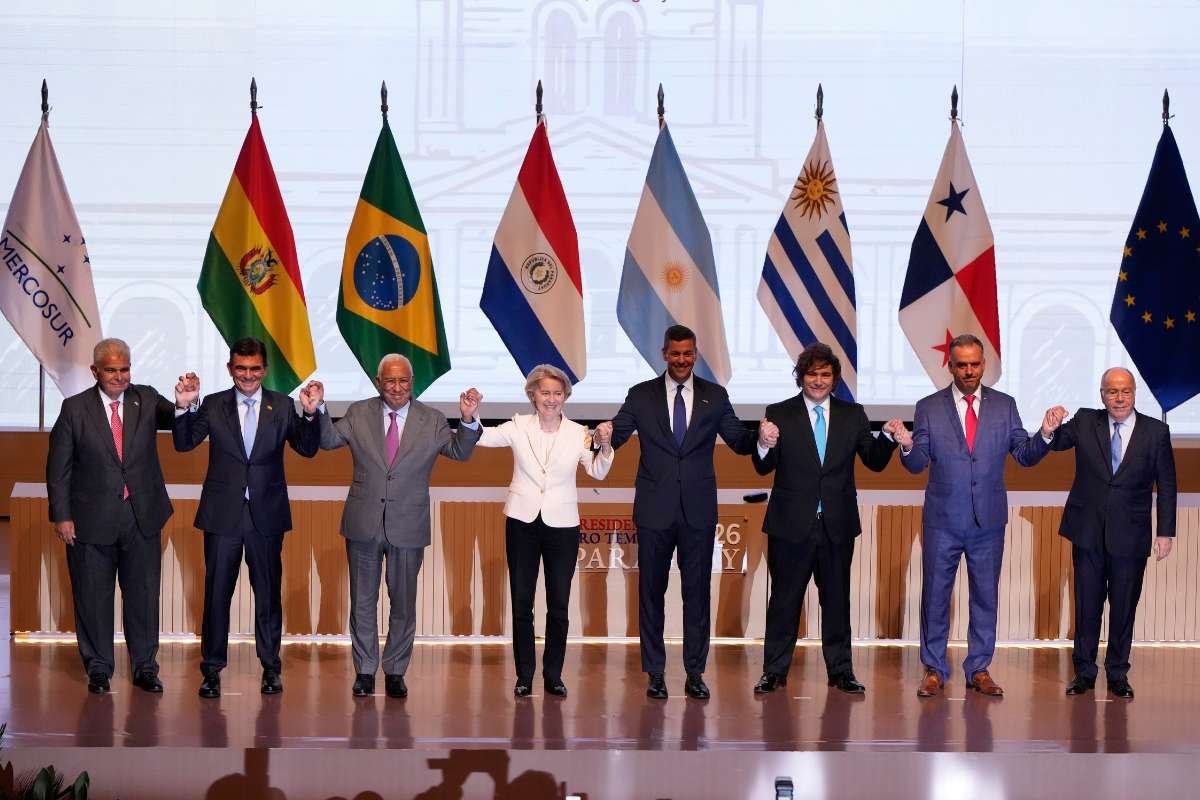
The European Union and the Mercosur bloc of South American countries have formally signed a Landmark Trade Deal, concluding more than 25 years of negotiations. This accord unites two major economic regions and is expected to reshape trade flows across agriculture, manufacturing, and services for businesses on both sides of the Atlantic.
The agreement creates one of the largest integrated trade areas in the world, covering a combined market of more than 700 million consumers. Together, the EU and Mercosur account for roughly a quarter of global economic output. For entrepreneurs and business owners, the deal signals broader market access, lower trade barriers, and new opportunities across multiple sectors.
Trade Scope and Market Access Expansion
The Landmark Trade Deal removes tariffs on more than 90 percent of goods and services exchanged between the two regions. While certain duties will be phased out gradually over 10 to 15 years, the framework is designed to simplify cross-border trade and reduce long-standing cost barriers.
European manufacturers are expected to benefit from improved access to South American markets, particularly in sectors such as automobiles, machinery, chemicals, and industrial equipment. Mercosur countries, which include Argentina, Brazil, Paraguay, and Uruguay, bring strong capabilities in agriculture, food production, and raw materials.
Agricultural exports remain a central feature of the deal. Products such as beef, poultry, sugar, and ethanol will gain improved access to European markets, though some items will be subject to quotas and volume limits. These safeguards are designed to manage supply levels while still opening new export channels for producers.
For service providers, the Landmark Trade Deal expands access in areas such as transport, digital services, and professional services. It also introduces provisions to reduce administrative friction, enhance customs cooperation, and increase transparency around regulations. These measures are expected to cut delays and lower compliance costs for companies engaged in trade.
Small and medium-sized enterprises may see particular benefits from simplified procedures and clearer trade rules. Lower entry barriers could make it easier for growing firms to explore new export markets or establish supply relationships across continents.
Investment Implications and Sector Outlook
Beyond trade in goods and services, the Landmark Trade Deal is expected to boost investment flows between Europe and South America. Companies may gain stronger incentives to expand production, distribution, or sourcing operations within the partner regions.
Mercosur economies offer access to agricultural outputs, energy resources, and industrial inputs that are increasingly important for global supply chains. European firms seeking diversification may view the agreement as a framework that supports sourcing and investment decisions.
At the same time, South American companies gain improved access to advanced manufacturing markets and technology-driven industries in Europe. This could encourage partnerships, joint ventures, and technology transfer across sectors such as food processing, renewable energy, logistics, and advanced manufacturing.
While the agreement has been signed, it still requires approval by the European Parliament before it can fully take effect. Implementation timelines will depend on ratification and the phased reduction of tariffs across different product categories.
For business leaders, the signing of the Landmark Trade Deal marks a turning point after years of uncertainty. Companies engaged in trade between Europe and South America can now plan with a clearer framework that supports long-term commercial engagement.
As the agreement moves toward implementation, firms are expected to assess tariff schedules, quota limits, and regulatory changes to identify where cost savings and growth opportunities may emerge. The scale of the market and breadth of sectors covered suggest the deal will have wide-ranging implications for global trade strategies.