The 2026 employee engagement reality: beyond the pizza party
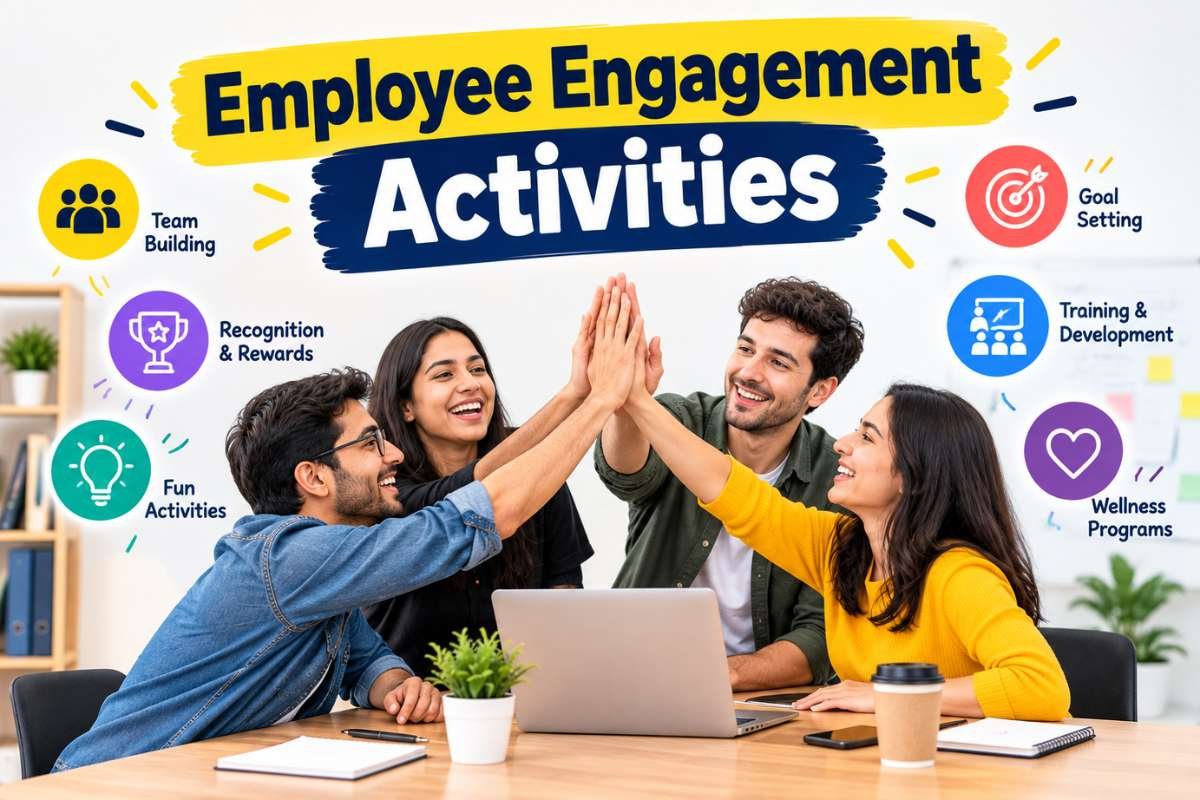
Employee engagement is no longer about stocked breakrooms or casual Fridays. Today’s workforce demands purpose, career mobility, and genuine appreciation.
According to Gallup’s State of the Global Workplace, global employee engagement sits at just 20%, with U.S. worker engagement plateauing at 31%. Low engagement costs the global economy an estimated $8.9 trillion in lost productivity annually, roughly 9% of global GDP.
| THE COST OF DISENGAGEMENT (2026) [Global Engagement Rate] ⇒ 20% Engaged | 80% Disengaged / Detached [Global Financial Impact] ⇒ $8.9 Trillion lost annually (~9% GDP) [US Engagement Baseline] ⇒ 31% Engaged (69% Unengaged/Detached) |
When you reframe employee engagement activities as operational investments rather than HR expenses, team performance shifts dramatically. Engaging activities build psychological safety, clarify performance metrics, and connect individual daily tasks directly to organizational revenue goals.
How employee engagement impacts business performance

Employee engagement acts as an operational force multiplier across every core business metric. Teams operating in the top quartile of employee engagement consistently outperform their bottom-quartile peers across crucial financial and operational KPIs:
- 23% Higher Profitability: Engaged teams deliver stronger customer service, driving higher recurring revenue and lower client churn.
- 18% Higher Productivity: Clear goals paired with regular recognition increase output without triggering employee burnout.
- 21% to 51% Lower Turnover: Retention increases sharply when professionals see a clear internal path for skill development.
- 63% Fewer Safety Incidents: High engagement directly reduces workplace accidents and procedural errors in operational environments.
HIGH-ENGAGEMENT VS. LOW-ENGAGEMENT OUTCOMES
| Top-Quartile Engaged Teams | Bottom-Quartile Teams |
|---|---|
| +23% Higher Net Profit Margin | High Voluntary Turnover Rates |
| +18% Increase in Worker Output | Increased Workplace Burnout |
| -51% Turnover (In Low-Turnover Sector) | -63% Fewer Operational Errors |
Real-world example: When Salesforce operationalized structured, peer-to-peer recognition programs and aligned weekly manager check-ins, they observed a direct correlation between internal engagement scores and quarter-over-quarter quota attainment across their commercial sales teams.
Proven employee engagement activities that deliver measurable ROI
Executing high-ROI employee engagement activities requires targeting key pillars of workplace satisfaction: career growth, peer recognition, cross-functional trust, and personal well-being.
| HIGH-ROI ENGAGEMENT FRAMEWORK |
⇩
| [Professional Growth] | [Recognition & Belonging] |
| Cross-Skilling Sprints Hackathons & Innovation Labs | Peer-Nominated Awards Executive Mentorship Hours |
⇩
| [Operational Health] |
| Asynchronous Pulse Check-ins Manager Feedback Loops |
1. Cross-departmental innovation sprints & hackathons
Move beyond artificial team-building exercises by inviting cross-functional cohorts to solve actual business bottlenecks over a 48-hour sprint.
How It Works: Create mixed teams, pairing engineering, marketing, and customer support, and assign them real operational challenges. Allow teams to present prototype solutions directly to executive leadership.
Why It Works: It breaks down functional silos, builds cross-departmental empathy, and accelerates internal innovation.
2. Micro-mentorship & executive office hours
Structured, low-friction mentorship connects junior talent directly with senior leaders to foster retention and knowledge transfer.
How It Works: Set up monthly 30-minute rotational “flash mentorship” sessions where team members pitch ideas or seek career advice from department heads.
Why It Works: According to SHRM research, access to leadership development remains a top driver of retention among mid-career professionals.
3. Peer-nominated values recognition programs
Top-down praise from executives is helpful, but peer-to-peer validation builds daily cultural alignment.
How It Works: Implement an automated platform where team members give public shout-outs tied to core company values. Accompany these badges with tangible perks, such as bonus learning stipends or extra paid leave.
Why It Works: Regular peer recognition transforms values from abstract mission statements into observable workplace behaviors.
How to choose the right engagement activities for your business

Not all employee engagement activities fit every organization. Selecting activities blindly leads to poor attendance and wasted budget. Follow this structured strategy to match initiatives with your specific workforce profile:
ACTIVITY SELECTION MATRIX
| Work Environment | Primary Challenge | Recommended Activity |
|---|---|---|
| Distributed / Remote | Isolation / Silos | Virtual Hackathons & Async Gratitude Channels |
| On-Site / Factory | Burnout / Safety | Peer Safety Awards & Skill Micro-Spirits |
| Hybrid Office | Disconnected Teams | Executive Mentorship & Innovation Days |
- Audit Baseline Engagement Gaps: Use short, anonymous pulse surveys to pinpoint exact friction points, such as lack of recognition, unclear career paths, or poor work-life balance.
- Segment by Work Environment: Remote teams require asynchronous tools and virtual collaboration spaces. Frontline or manufacturing teams benefit from shift-based recognition, safety milestones, and tangible on-site perks.
- Align with Strategic Business Priorities: If your business focus for the quarter is product quality, center engagement around continuous improvement challenges or quality innovation awards.
How managers can improve employee participation
Managers account for at least 70% of the variance in team engagement levels; when managers view employee engagement activities as optional HR events, participation plummets.
| [Manager Behavior] → [Team Participation Rate] | |
| * Participates First * Integrates into Workday * Protects Schedule | * High Attendance * Strong Buy-In * Measurable Morale Boost |
To drive sustained participation, managers must adopt three core behaviors:
- Lead by Example: Managers should actively attend and participate in engagement initiatives rather than sending delegate emails.
- Protect Time for Engagement: Integrate activities into standard working hours rather than expecting employees to join during lunch or post-shift downtime.
- Connect Participation to Career Development: Frame hackathons, cross-functional projects, and mentorship opportunities as tangible avenues for professional advancement and performance reviews.
How to measure employee engagement activities
To evaluate the return on investment (ROI) of your initiatives, combine quantitative performance metrics with qualitative sentiment data.
ENGAGEMENT MEASUREMENT DASHBOARD
| Metric Category | Data Source | Key Performance Indicator |
|---|---|---|
| Sentiments | eNPS Surveys | Pulse score improvement |
| Operational | HRIS Analytics | Turnover & Absence rates |
| Performance | CRM / ERP Systems | Productivity & Sales output |
- Employee Net Promoter Score (eNPS): Measure recommendation rates quarterly using the core benchmark question: “On a scale of 0-10, how likely are you to recommend working here to a colleague?”
- Voluntary Turnover & Absenteeism Rates: Track retention changes across departments participating in structured engagement activities against non-participating control groups.
- Internal Mobility Rates: Measure the percentage of open positions filled by internal promotions resulting from cross-training and mentorship programs.
Common employee engagement mistakes to avoid

Even well-intentioned HR initiatives fail without strategic grounding. Steer clear of these common operational missteps:
- Treating Perks as Culture: Free snacks, ping-pong tables, and mandatory social hours cannot fix low pay, unclear expectations, or toxic management.
- Survey Fatigue Without Action: Conducting monthly engagement surveys without publishing tangible action plans breaks employee trust faster than asking no questions at all.
- One-Size-Fits-All Programming: Forcing identical activities onto remote, hybrid, and frontline workers ignores distinct operational realities.
- Top-Down Mandatory Fun: Making team-building activities mandatory creates resentment rather than genuine connection. Participation should stem from intrinsic interest and clear professional value.
Conclusion
Building a highly engaged workforce requires moving past superficial perks and investing in sustainable systems that value employee growth, autonomy, and recognition. When employee engagement activities are tied directly to operational outcomes, such as innovation, mentorship, and transparent communication, they transform workplace culture from passively satisfied to actively high-performing.
By measuring the right metrics, equipping managers to lead by example, and tailoring initiatives to your team’s specific working environment, your organization can foster deep loyalty and unlock measurable business performance.
FAQs:
1. What are the most effective employee engagement activities for remote teams?
Virtual hackathons, micro-mentorship, and asynchronous peer recognition.
2. Virtual hackathons, micro-mentorship, and asynchronous peer recognition.
Weekly peer recognition, monthly career sessions, and quarterly team challenges.
3. What is the difference between employee satisfaction and employee engagement?
Satisfaction is contentment with compensation and perks; engagement is commitment to driving performance.