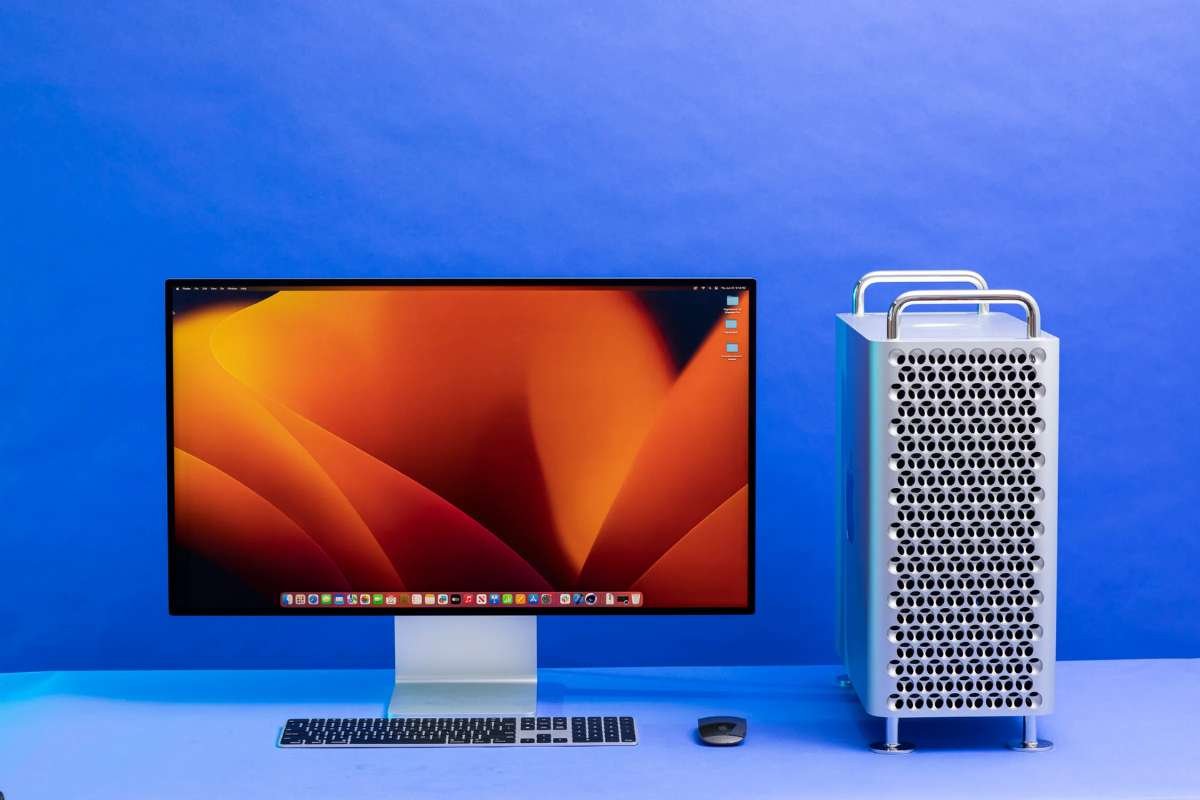
Apple has officially discontinued the Mac Pro, closing the chapter on one of its most iconic desktop computers as Apple Retires Mac Pro after nearly two decades. First introduced in 2006, the Mac Pro quickly became a cornerstone for professionals working in demanding fields such as video editing, music production, animation, and scientific computing, thanks to its raw power and modular design.
The final iteration, released in 2023 and powered by Apple’s M2 Ultra chip, was intended to bring the Mac Pro into the company’s new generation of in-house silicon. While the device delivered exceptional processing speeds and retained certain professional-grade features like PCIe expansion slots, it failed to fully capture the flexibility that had long defined the product line.
By 2026, the Mac Pro’s role within Apple’s lineup had diminished significantly. Its discontinuation, though not entirely unexpected, marks a major turning point—not just for Apple’s hardware strategy but for the broader concept of high-end desktop computing.
Why the Mac Pro Lost Its Edge
The Mac Pro’s decline was not sudden; it resulted from a gradual shift in Apple’s technological priorities following the move that Apple Retires Mac Pro from its lineup. The transition from Intel processors to Apple silicon fundamentally changed how the company designs its computers, favoring tightly integrated architectures over user-upgradable systems.
This shift created a mismatch between the Mac Pro’s traditional strengths and Apple’s new direction. The device’s hallmark feature, its modularity, became less relevant in a system built around integration. While it still supported some internal expansion, it lacked key capabilities that professionals increasingly relied on, such as upgrading or swapping GPUs. This limitation proved significant for industries dependent on high-performance graphics processing, such as 3D rendering, advanced visual effects, and machine learning.
At the same time, Apple introduced a strong internal competitor: the Mac Studio. Smaller, more affordable, and powered by the same class of Apple silicon chips, the Mac Studio delivered comparable performance for many professional workflows. For a large segment of users, it offered better value without the complexity or high cost of the Mac Pro.
As a result, the Mac Pro began to feel like a legacy product still powerful, but no longer aligned with the needs of most users or the company’s evolving vision. Its niche appeal and premium pricing made it increasingly difficult to justify its place in Apple’s portfolio.
A Shift Toward Compact, Integrated Power
With the Mac Pro now retired, Apple is clearly consolidating its professional desktop strategy around compact, high-performance systems like the Mac Studio after Apple Retires Mac Pro as its flagship tower. These machines deliver exceptional power within a smaller footprint, reflecting both technological advancements and evolving user preferences.
Rather than relying on internal upgrades, Apple is leaning into external expansion through high-speed connectivity solutions. Technologies such as Thunderbolt allow professionals to connect storage devices, displays, and specialized hardware without compromising performance. This approach offers flexibility in a different form, one that aligns more closely with Apple’s ecosystem-driven philosophy.
The shift also highlights a broader change in how professionals approach computing. Today’s users often prioritize efficiency, reliability, and out-of-the-box performance over the ability to customize internal components. Apple silicon supports this trend by delivering optimized performance through tight integration between hardware and software, reducing the need for constant upgrades.
The discontinuation of the Mac Pro ultimately represents a philosophical shift as Apple Retires Mac Pro and moves away from large, upgradeable towers toward streamlined systems emphasizing efficiency, compact design, and seamless user experience. While the Mac Pro leaves behind a legacy of innovation and power, its departure signals that the future of professional computing centers on intelligent integration rather than modularity.
As Apple continues to advance its silicon technology, the definition of a “pro” machine is being reimagined. In this new era, performance is no longer tied to size or expandability, but to how efficiently hardware and software work together to meet the demands of modern workflows.