The world’s forests are shrinking at an alarming rate, heightening the risk of widespread ecosystem collapse. Without intervention to restore and protect these vital landscapes, the consequences could be profound. Deforestation impacts not only plants and wildlife, but also humans and the resources we depend upon: lumber for housing, utility poles that deliver electricity, baby diapers, and packaging that enables global shipping. Healthy ecosystems are essential to preserving biodiversity, clean water, fertile soil, and the very foundations of the global economy. To safeguard these systems, foresters and timberland investors must balance lumber production with long-term ecological health. When this balance is disrupted, the ripple effects extend to food security, natural resources, and ultimately climate stability.
This underscores the critical importance of ecosystem restoration and biodiversity management, which rely on science-based solutions and sustainable forestry practices to rebuild ecosystems, conserve biodiversity, and create enduring value for both communities and the environment. Investors and companies that directly rely upon wood and its byproducts have the ability to make a dramatic impact on the future health of the planet and the global supply chain.
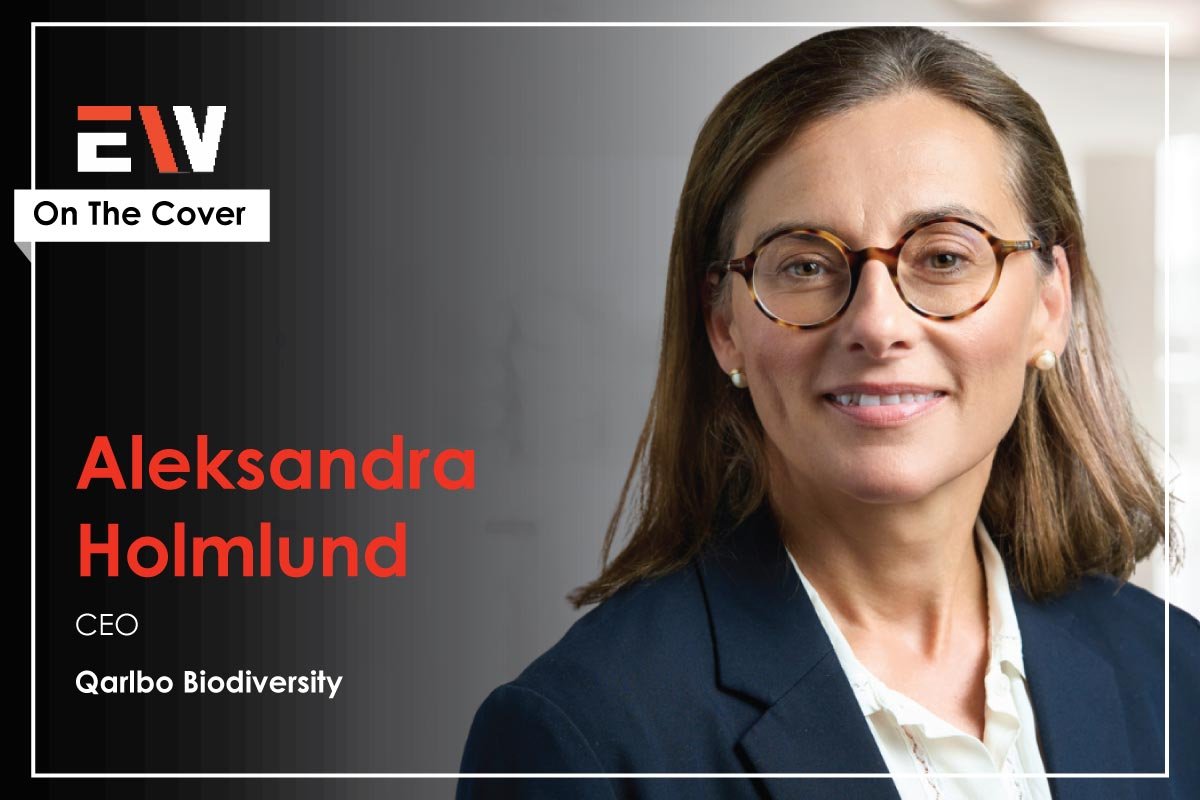
Aleksandra Holmlund, CEO of Qarlbo Biodiversity, is redefining how production forestry can deliver both strong financial returns and measurable ecological benefits. By integrating cutting-edge science into working forests, she is pioneering projects that restore ecosystems while maintaining sustainable timber production. Her team has created frameworks such as the Qarlbo Nature+® Forest Management Strategy and an innovative biodiversity credit methodology, transforming ecological improvements into credible investment opportunities. Beyond the forests, she engages with policymakers to help shape global biodiversity standards and fosters collaborations built on transparency and long-term stewardship.
Under her leadership, Qarlbo Biodiversity has:
- Enabled the first biodiversity credit transactions in Sweden and the U.S.
- Restored biodiversity in century-old forests
- Launched the U.S.’s first voluntary biodiversity credit sale
- Partnered with businesses like Woodland Biofuels to create sustainable value chains
Backed by Article 9 SFDR classification and independent verification under the Global Biocredit Standard, Aleksandra Holmlund and the Qarlbo Biodiversity team have worked to place the company at the forefront of creating a global biodiversity economy, where restoring nature and financial growth go hand in hand.
The Birth of Qarlbo Biodiversity
Qarlbo Biodiversity was founded on the belief that ecosystem restoration must be ecologically impactful and financially viable at scale. The idea grew from years of experience in timberland investment, sustainable forestry, and international asset management, where a clear gap existed between the capital looking for nature-based solutions and the reliable frameworks needed to deploy that capital effectively. Along with founding investor Conni Jonsson (Founder & Chairman of EQT) the team recognized biodiversity loss as a global risk and as a powerful investment opportunity. With the support of Qarlbo AB and a cross-disciplinary team, Qarlbo Biodiversity was built as a platform that connects science, policy, and capital to restore nature, while delivering measurable ecological and financial results.
The First Biodiversity Credit Transactions
One of the earliest challenges for Qarlbo Biodiversity was gaining third-party validation for its biodiversity credit methodology in a market that was still young and evolving. “Biodiversity credits remain a novel and evolving instrument, and some scientists have raised valid concerns about whether site-specific ecological outcomes can be translated into credible, investable assets. These challenges are real—but so is the growing momentum to address them through rigorous methodologies, transparent monitoring, and collaborative standard-setting.
Overcoming this required close collaboration with scientists, proactive engagement with policy leaders, and a deep understanding of regulatory boundaries. The experience underscored the importance of transparency, independent verification, and disciplined execution. Ultimately, these efforts allowed Qarlbo Biodiversity to conduct the first commercial biodiversity credit transactions in Sweden and the United States, establishing key benchmarks for this emerging market.
Take Meaningful Steps, No Matter the Circumstance
When asked about her biggest personal and professional lesson, Aleksandra Holmlund reflects on the reality that change doesn’t happen all at once. Policies, investor priorities, and market conditions often move at different speeds, creating challenges and uncertainty. She believes the key is to take meaningful action with the resources and opportunities available today, while staying flexible to adapt as externalities evolve.
Aleksandra Holmlund is guided by Theodore Roosevelt’s words,“Do what you can, with what you have, where you are,” using them as a reminder that even small, consistent steps can create lasting impact.
Innovating at the Intersection of Science and Investment
At Qarlbo, innovation comes from combining ecological science with institutional-level investment practices in a disciplined way. The company’s proprietary Qarlbo Nature+® Forest Management Strategy uses the latest science to apply tailored biodiversity measures to commercially productive forests, creating measurable ecological improvements while maintaining strong investment returns. With rigorous monitoring, independent verification, and transparent governance, Qarlbo Biodiversity ensures its solutions meet the expectations of scientists and investors.
Key tools and frameworks include:
- A biodiversity credit methodology tailored for production forests
- The Qarlbo Nature+® Forest Management Strategy, incorporating mitigation hierarchy, habitat restoration methods, and FSC-aligned metrics
- A monitoring, reporting, and verification (MRV) platform with Treemetrics using remote sensing and on-the-ground data
Together, these tools bring scientific rigor into investment decisions, linking ecological restoration with measurable, long-term impact.
Rise of Standardized Nature Finance Approaches
When asked about the trends shaping the future of biodiversity and environmental conservation, Aleksandra Holmlund notes that climate and nature agendas are increasingly aligning, with biodiversity emerging as a crucial factor in financial and regulatory systems. She highlights the growing importance of standardized, credible approaches to nature finance, citing initiatives like the Taskforce on Nature-related Financial Disclosures (TNFD) and the rise of structured nature credit markets. To lead in this evolving landscape, Qarlbo Biodiversity actively participates in shaping global standards, co-founding the UN-led Biodiversity Credit Alliance (BCA) and the Swedish Biocredit Alliance, and collaborating closely with policymakers, including the European Commission, to foster standardized biodiversity crediting and support the development of global markets.
Global Recognition
Qarlbo Biodiversity’s impact and credibility are validated through several recognized standards and certifications. All the forestlands within its portfolio seek Forest Stewardship Council’s (FSC) sustainable forest management certification, ensuring adherence to globally recognized sustainable forestry practices. Its biodiversity credits are independently verified under the Global Biocredit Standard, providing stakeholders with transparency and assurance. Additionally, the company’s investments qualify under Article 9 of the EU Sustainable Finance Disclosure Regulation (SFDR)—the EU’s most stringent “dark green” category—demonstrating transparent, science-based reporting on biodiversity outcomes and a commitment to measurable positive environmental impact.
Success Story
In Sweden, Qarlbo Biodiversity brought a 100-year-old pine forest back to life, restoring biodiversity in intensively managed forests. The company utilized its Biodiversity Credit Methodology to incorporate dead wood and reduce harvesting, thereby enhancing biodiversity in the forest. In Louisiana, in the southeastern U.S., Qarlbo Biodiversity completed the first voluntary biodiversity credit sale, restoring threatened longleaf pine forests while maintaining sustainable long-term timber production. These projects show how the company successfully protects nature while supporting the economy.
Partnership with Woodland Biofuels for Sustainable Timber Supply
Qarlbo Biodiversity recently signed an agreement with Woodland Biofuels to supply up to 500,000 tons of sustainable pine thinnings from its U.S. properties. This initiative is part of a broader strategy to integrate nature-positive forest management into circular value chains. By combining the sale of premium wood with positive nature outcomes, the company demonstrates that protecting biodiversity can be sustainable and profitable.
Institutional and Operational Excellence in Forestry
Qarlbo Biodiversity manages over 10,000 acres in the United States, along with several thousand hectares across Scotland and Uruguay. The team has grown considerably over the past year, bringing in new expertise in finance, forestry operations, and applied ecology. The leadership team has a strong track record, possessing decades of combined experience across institutional and operational settings and having managed more than $1 billion in forestry assets in previous roles.
A Culture That Drives Impact
Qarlbo Biodiversity’s culture focuses on honesty in science, strong operations, and caring for the environment over the long term. The team combines investment knowledge with ecological science to create benefits for nature and investors. Employees are encouraged to keep learning, take action, and stay accountable, knowing that trust, credibility, and measurable results are key to success.
Social Media Highlight
Qarlbo Biodiversity has received notable media coverage, particularly for its recent milestones such as the sale of the first voluntary biodiversity credits in the United States and its agreement to supply sustainable timber to Woodland Biofuels.
Interviews and Features Include:
- The Wall Street Journal: Qarlbo Biodiversity Aims to Reshape Timber Production
- New Private Markets: In brief: Mixed messages at #RAOtheAmericas25
- IREI: Q&A: Biodiversity credits may be the future of sustainable investing in the United States
- New Private Markets: EQT founder’s family office inks ‘milestone’ biodiversity credit sale
- Semafor: Biodiversity credits are slowly finding a market
Additional Coverage:
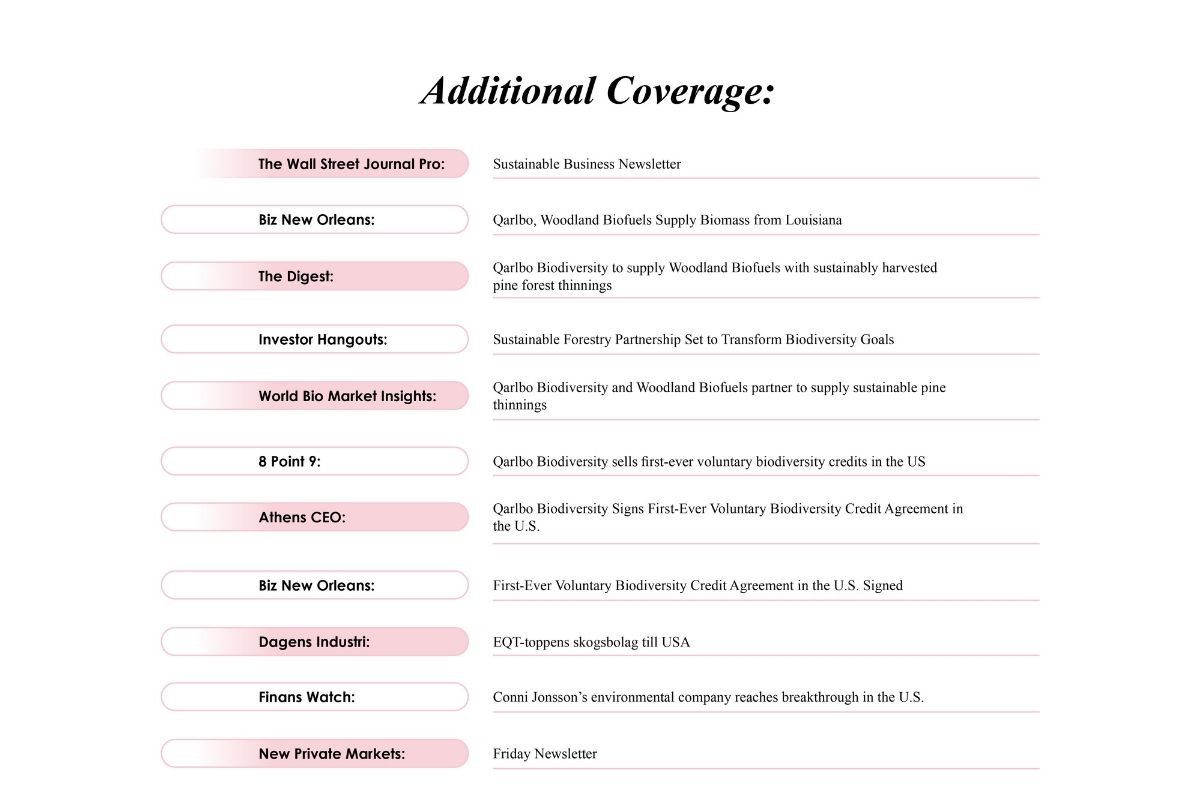
- The Wall Street Journal Pro: Sustainable Business Newsletter
- Biz New Orleans: Qarlbo, Woodland Biofuels Supply Biomass from Louisiana
- The Digest: Qarlbo Biodiversity to supply Woodland Biofuels with sustainably harvested pine forest thinnings
- Investor Hangouts: Sustainable Forestry Partnership Set to Transform Biodiversity Goals
- World Bio Market Insights: Qarlbo Biodiversity and Woodland Biofuels partner to supply sustainable pine thinnings
- 8 Point 9: Qarlbo Biodiversity sells first-ever voluntary biodiversity credits in the US
- Athens CEO: Qarlbo Biodiversity Signs First-Ever Voluntary Biodiversity Credit Agreement in the U.S.
- Biz New Orleans: First-Ever Voluntary Biodiversity Credit Agreement in the U.S. Signed
- Dagens Industri: EQT-toppens skogsbolag till USA
- Finans Watch: Conni Jonsson’s environmental company reaches breakthrough in the U.S.
- New Private Markets: Friday Newsletter
This coverage highlights Qarlbo Biodiversity’s growing influence in sustainable forestry and biodiversity markets, showcasing its pioneering role in ecological restoration and innovative investment solutions.